
Sierra Leone Enacts New Town and Country Planning Law: A Turning Point for Urban Development

Sierra Leone has taken a historic step in shaping its urban future with the passage of the Town and Country Planning Law 2025, which replaces the outdated 1946 spatial planning legislation. This landmark reform responds to the pressing challenges of rapid urbanization, climate change, and weak governance. It provides a modern legal foundation for spatial planning, infrastructure, housing, and sustainable development. Unlike its predecessor, the new law introduces clearer provisions for national spatial policy, monitoring and evaluation, and enforcement mechanisms, ensuring spatial planning keeps pace with contemporary realities.
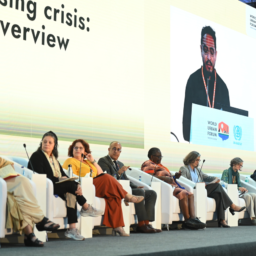
UN-Habitat’s Regional Office for Africa played a pivotal role in achieving this milestone, helping to bridge collaboration between the Freetown City Council, the Ministry of Lands, Housing and Country Planning, and central government institutions. The process was set in motion through a request by the Mayor of Freetown, Her Worship Yvonne Aki-Sawyer, and solidified through the high-level engagement with Sierra Leone’s delegation at the World Urban Forum in Cairo. The work was further enriched through consultations with the Minister of Lands, Dr. Turad Senessie, and Deputy Minister Phyllis Kapu. This multistakeholder process, funded through the World Bank’s Resilient Urban Sierra Leone Project and supported by a wide range of stakeholders, reflects UN-Habitat’s commitment to supporting governments in advancing legal reform and strengthening urban governance.
The Policy, Legislation and Governance Section of UN-Habitat reviewed the Bill to ensure the law’s principles resonate with global best practices promoted through UN-Habitat’s knowledge tools:
- The Planning Law Assessment Framework, which helps identify gaps and strengths in planning legislation;
- The Slum Upgrading Legal Assessment Tool, which evaluates the inclusivity of urban legal frameworks for informal settlements; and
- The Guidelines for the Scrutiny of Urban Legislation, a manual designed to ensure that urban laws are effective, transparent, enforceable, and responsive to urban realities.
Overall, the new law empowers local councils with stronger authority over development control, marking a critical step towards decentralization and accountability. It is widely regarded as a game changer that positions Sierra Leone for a more inclusive, resilient, and sustainable urban future. The gazetted version of the law will be availed in due course.