

Why do we need a
NATIONAL URBAN POLICY?

Urbanization in most developing countries is bringing about enormous changes in the spatial distribution of people, resource, as well as the use and consumption of land. Although such a process is strongly linked to social and economic development, many countries lack the supporting policies and frameworks that can leverage the process for increased development gains and guide it towards sustainable patterns. While urbanization creates huge wealth and opportunities, enables better use of assets and creates new ones, in many countries, particularly in the developing world, these aspects are not harnessed for development. In fact, in the developing world, urbanization challenges often seem to outpace the development gains. In order to harness urbanization, mitigate its negative externalities and promote an “urban paradigm shift”, there is need for a coordinated approach and clear policy directions. This is lacking in many countries, where several government departments are in charge of dealing with different aspects of the urbanization challenge. Moreover, urbanization is not considered a national development opportunity. In general, the overall understanding of cities in national development is very limited, and so is the appreciation of the structural transformations represented by the dynamics of growth in urban centres.

The development of a national urban policy is the key step for reasserting urban space and territoriality. It is also vital in providing the needed direction and course of action to support urban development.
The Policy provides an overarching coordinating framework to deal with the most pressing issues related to rapid urban development, including slum prevention and regularization, access to land, basic services and infrastructure, urban legislation, delegation of authority to sub-national and local governments, financial flows, urban planning regulations, urban mobility and urban energy requirements as well as job creation.
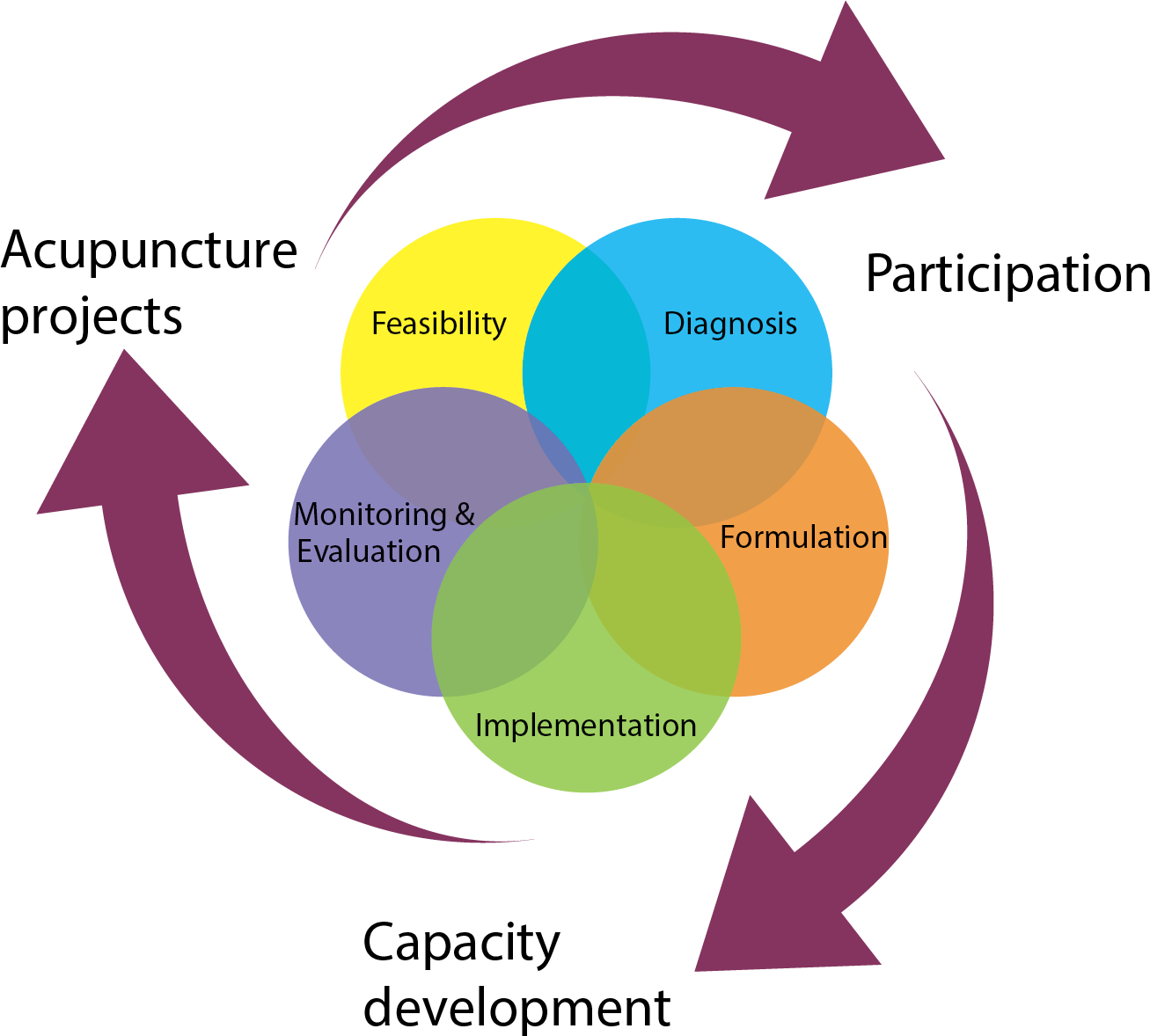
UN-Habitat’s Support for National Urban Policy
Brazil, China and South Africa are examples where clear national urban policies have been vital in orientating action to tackle inequality and to energize the development process. UN-Habitat has supported several urban policy development processes including those of Burundi, Malawi, Mongolia and Sri Lanka (National Urban Sector Policy Framework). UN-Habitat’s contribution to a national urban policy includes country assessment; advice on setting up of national processes and stakeholder participation; documentation of good practices to support national processes; analysis of urban planning policies and instruments; facilitation of local-national dialogue on reforms; dissemination and capacity development on the urban policy across the full range of actors. The results expected with the development of a national urban policy are:
- The identification of urban development priorities towards socially and economically equitable and environmentally friendly urban and national development;
- Guidance on the future development of the national urban system and its spatial configuration concretized through national and regional spatial plans for territorial development;
- Better coordination and guidance of actions by national actors, as well as lower levels of government in all sectors;
- Increased and more coordinated private and public investments in urban development and consequent improvement of cities’ productivity, inclusiveness and environmental conditions.
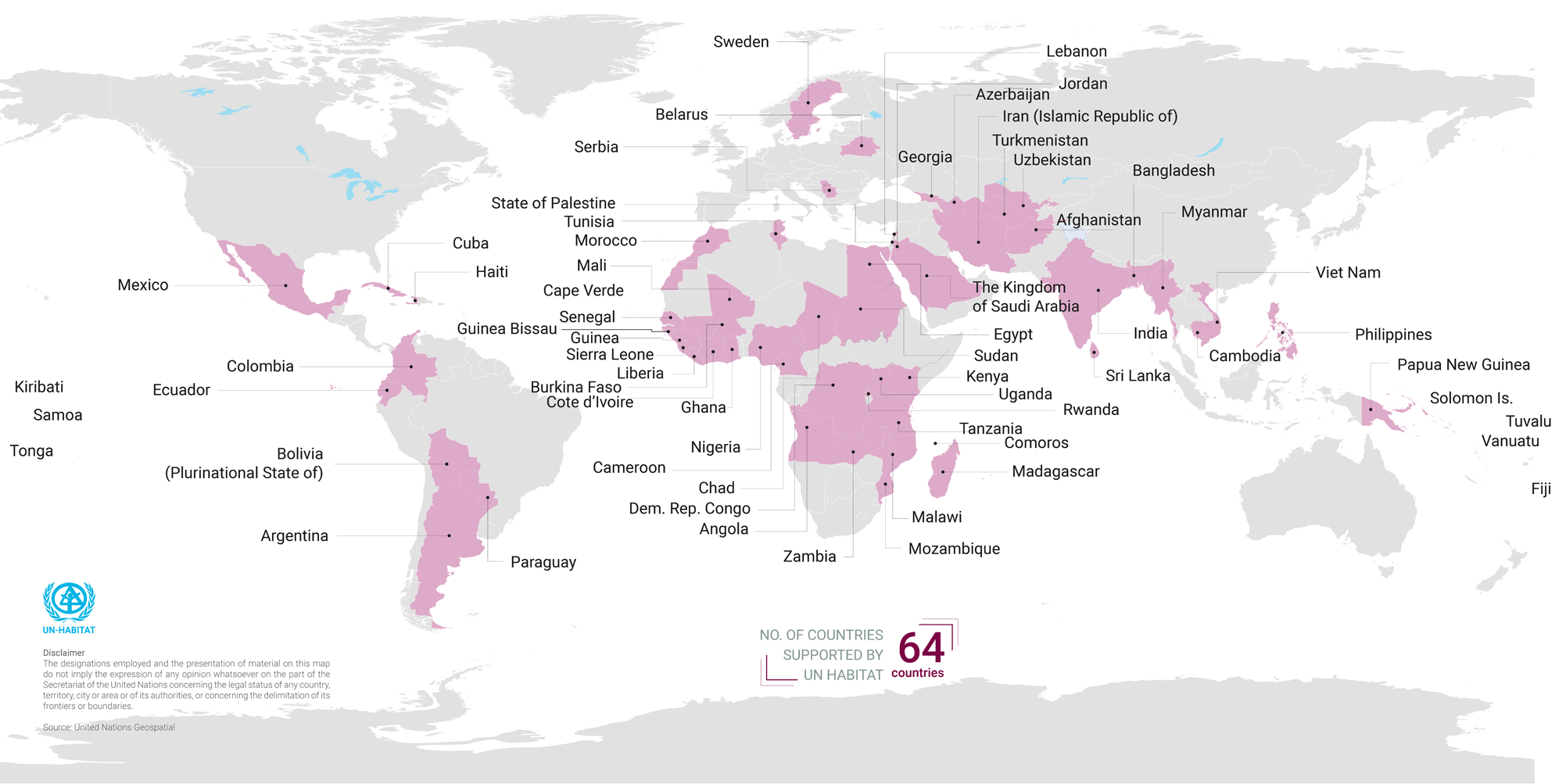
National Urban Policy Database 2024
The UN-Habitat National Urban Policy Database and Catalogue provide a global overview of the state of urban policy at the national level. They gather country-level data (when available) on the existence of relevant NUPs, dates of formulation, implementation, and monitoring and evaluation (as appropriate) main themes of these policies, the leading ministries and main actors, and, when possible, links to the policy documents. The aim of these tools is to gather pertinent information on National Urban Policies in a central location and therefore make available a broad overview of the state of National Urban Policy globally.
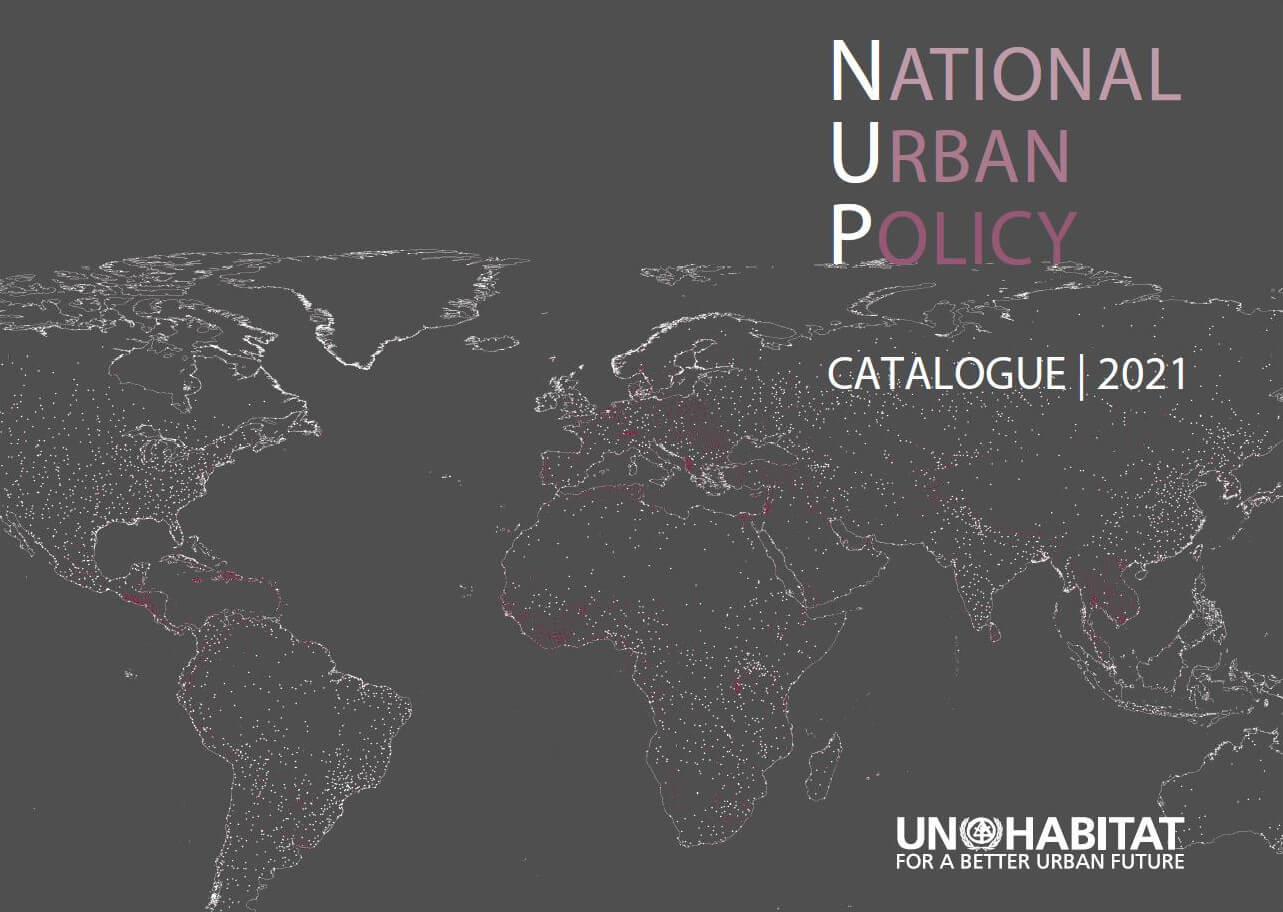
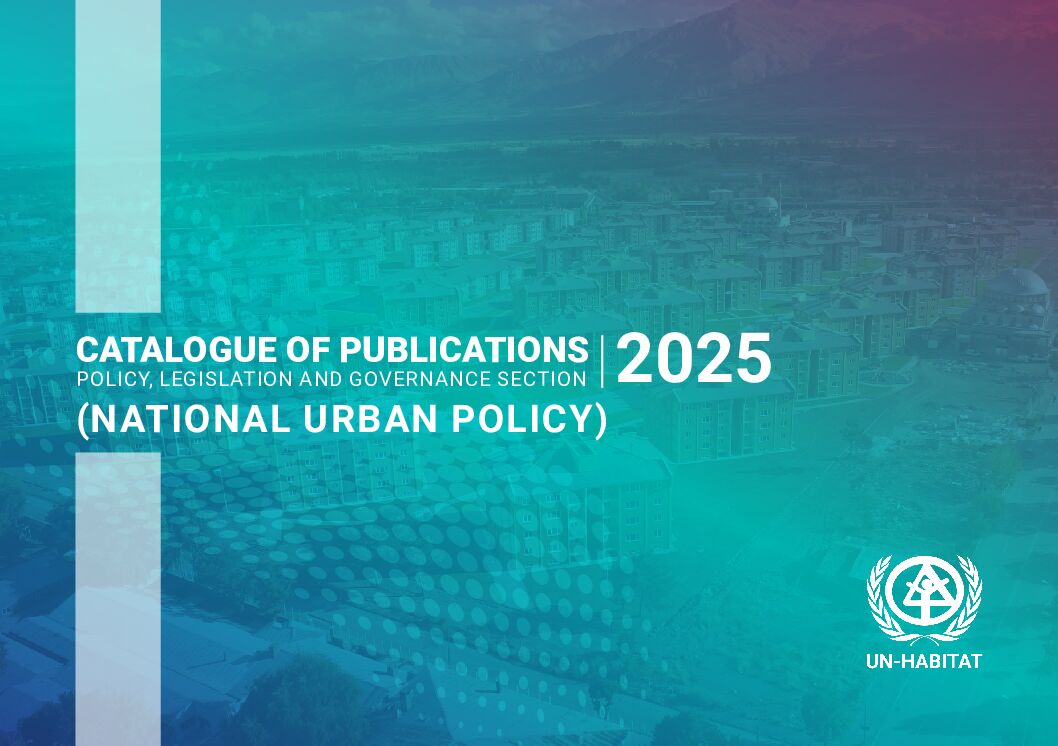
The 2025 Catalogue of Publications: Policy and Legislation Section (National Urban Policy) is a compilation of PLS, National Urban Policy normative tools and knowledge products to support governments at all levels and other stakeholders.
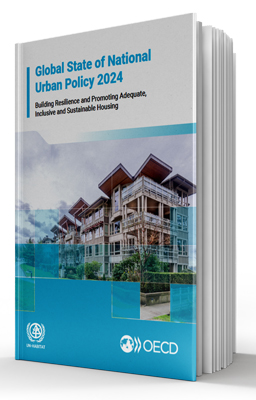
National Urban Policy publications
As part of the commitment of the Niger State Government (Nigeria) in creating compact, connected, socially…
Published On 27 October 2024
Downloads 63
Views 262
More people live in cities than ever before. The urban population more than doubled from 1.5 billion…
Published On 27 October 2024
Downloads 80
Views 215
The important role of urban policies for sustainable development has in the recent past gained prominence…
Published On 27 October 2024
Downloads 40
Views 183
Globally, urbanization has increased significantly, with the world’s urban population expected to reach…
Published On 27 October 2024
Downloads 85
Views 168
Urban Forums are critical and inclusive platforms to domesticate and localize global agendas and to…
Published On 3 July 2024
Downloads 60
Views 384
The National Urban Policy Programme (NUPP) remains a central tool towards promotion and realisation…
Published On 4 June 2024
Downloads 104
Views 352
Urbanization and population growth are increasingly putting pressure on the global food system as food…
Published On 14 November 2023
Downloads 156
Views 626
Migration and urbanization are increasingly two sides of the same coin: migration is in many countries…
Published On 24 October 2023
Downloads 396
Views 1123